

Uncover how martial law has shaken one of Asia’s leading democracies and what it means for the future.

South Korea is navigating a volatile political crisis following President Yoon Suk Yeol’s contentious implementation of martial law. In a televised address, Yoon defended the drastic measure, citing an alleged coup attempt orchestrated by opposition forces in cooperation with North Korea. The president framed his decision as essential to protecting the nation’s constitutional democracy.
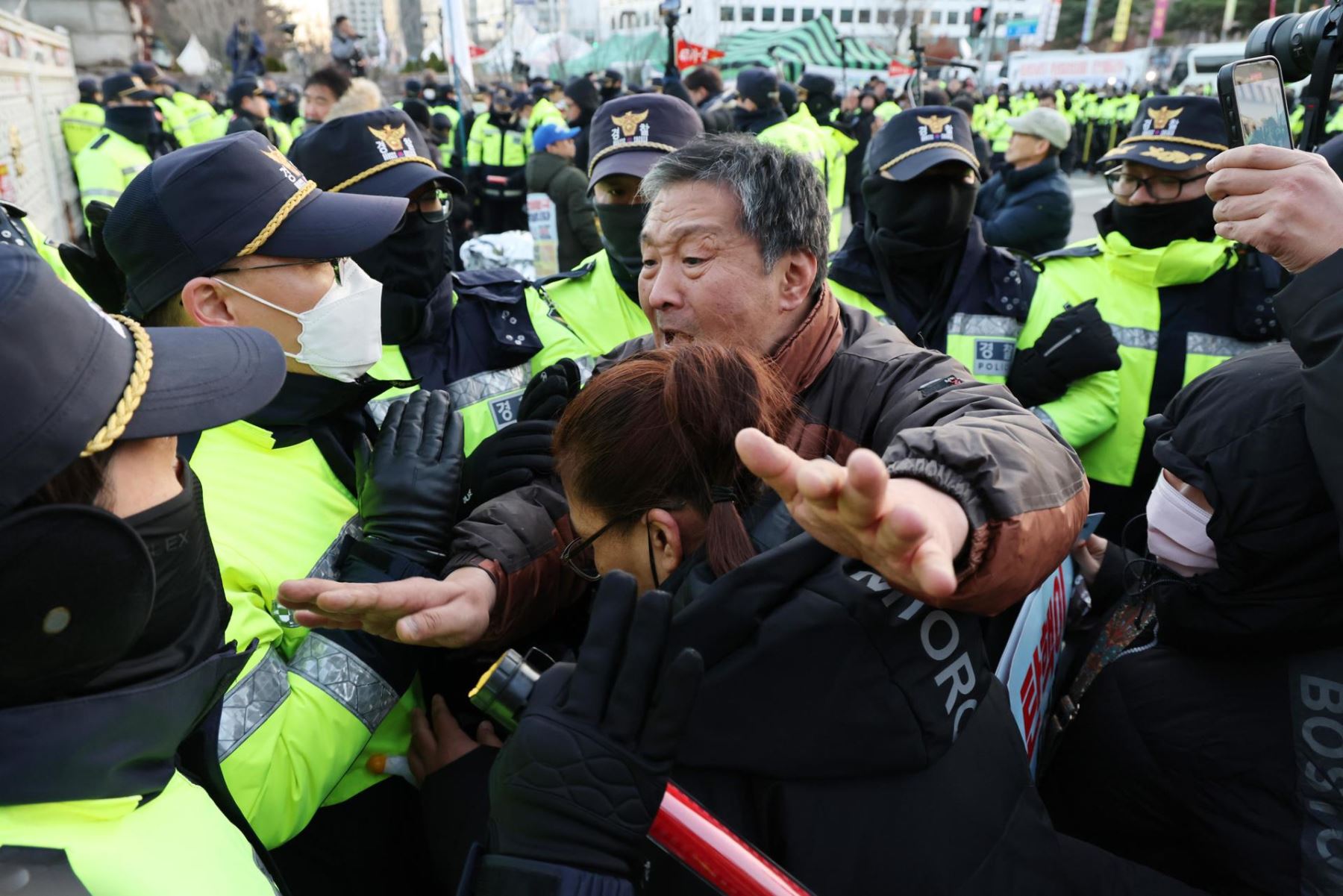
The announcement triggered widespread unrest, with protests erupting across major cities. Demonstrators gathered in front of the National Assembly, demanding Yoon’s resignation. Clashes between citizens and security forces intensified as the government deployed military units to enforce the controversial law.
On the political front, the move has deepened divisions. Han Dong-hoon, leader of the ruling People Power Party, openly criticized the president’s decision, calling for its immediate repeal. Meanwhile, opposition leader Lee Jae-myung labeled the martial law declaration as a «blatant abuse of power» and «an attack on democracy.»
Internationally, the development has raised alarm. The Mexican embassy, among others, issued advisories for its citizens in South Korea, urging vigilance and adherence to local safety guidelines. Human rights organizations and foreign governments have expressed concerns over the implications of martial law on civil liberties and democratic stability.
Experts warn of potential economic fallout as South Korea’s business environment and foreign investment outlook may be impacted by perceptions of political instability. The nation’s reputation as a leading democracy in Asia now faces critical scrutiny.
Descubre más desde
Suscríbete y recibe las últimas entradas en tu correo electrónico.












Deja un comentario